Burnout Recovery: Why Rest Isn't Enough
A woman on a Discovery Call told me she'd taken three weeks off work, hadn't checked email in ten days, and had come back feeling exactly the same. Same fog. Same short fuse. Same feeling of being slightly behind everything, no matter how much she caught up. She'd rested. Nothing had shifted.
Burnout doesn't live in the calendar. It lives in the nervous system. And a nervous system that's been running too hot for too long doesn't reset just because the schedule clears.
What most people call burnout is the end state of a system that's been stuck in low-grade activation for months or years. The constant background hum of deadlines, notifications, decisions, people to manage, and an underlying sense that rest is something you earn rather than something you take. The body adapts by normalising that state. It stops registering it as threat. It becomes how you feel all the time. When the calendar finally clears, the system doesn't downshift. It doesn't know how to. The pattern has been running too long.
This is why the usual advice doesn't reach it. Take time off, exercise more, sleep more, see friends — these address the inputs without changing the pattern. You can reduce the load on a dysregulated nervous system without teaching it to regulate. And regulation is where burnout actually lives.
A few things that do reach the pattern.
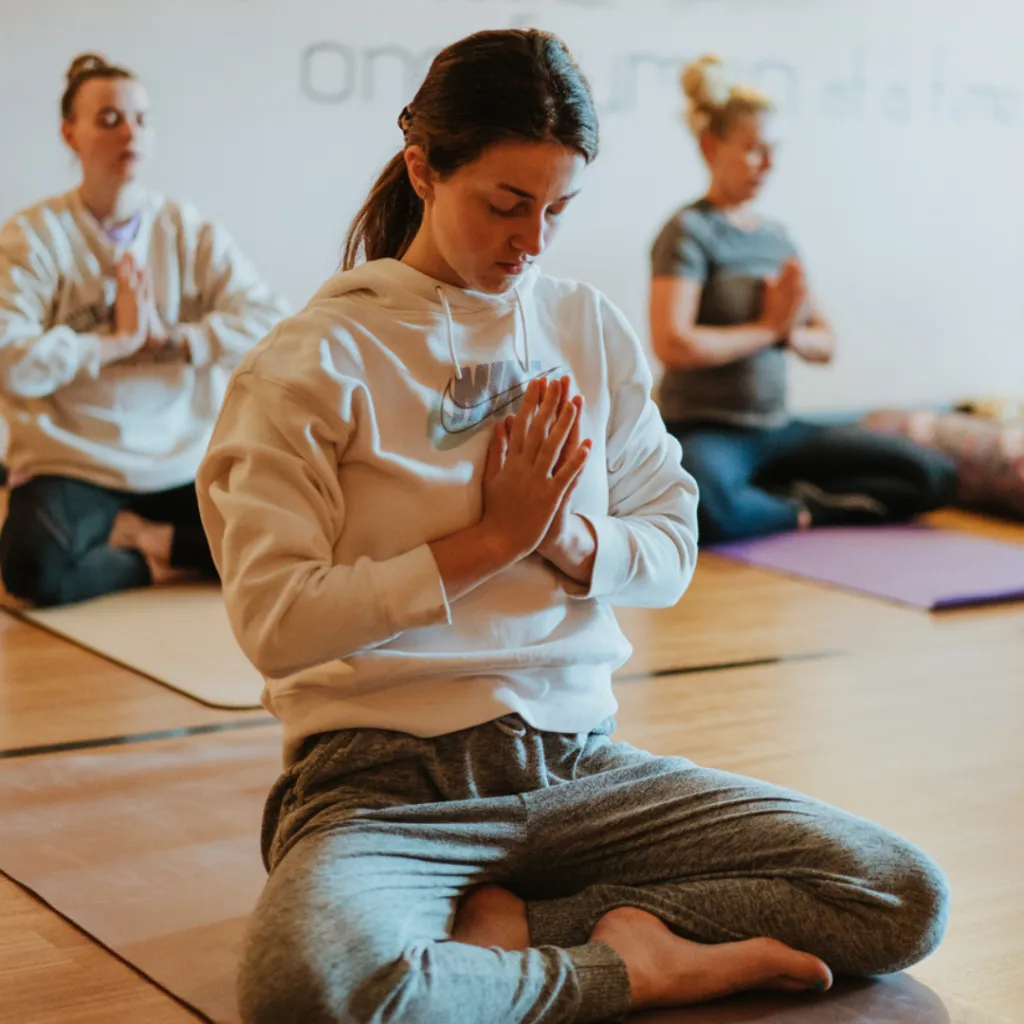
Physical practices that signal safety are processed differently than cognitive ones: slow controlled breath, deliberate movement, held stillness. Telling yourself to calm down doesn't change your nervous system state. Slowing the exhale to twice the length of the inhale does.
Consistency matters more than intensity. One week of good sleep doesn't undo eight months of four hours less than you needed. A yoga class three times a week for twelve weeks does more for a burnt-out nervous system than a ten-day retreat once a year. The system learns from repetition, not from exception.
The morning matters more than most people realise. The most common pattern in chronically burnt-out people is that they wake up already reactive. Phone in hand within three minutes of the alarm. Email before breakfast. The nervous system starts the day absorbing someone else's urgency and never fully exits that state.
A 4-Minute Practice Before the Phone
Sit upright on the edge of the bed before anything else. Feet flat, back straight.
Inhale through the nose for four counts. Exhale slowly for eight. The extended exhale activates the parasympathetic system — the recovery mode the body has been suppressing since the alarm. Do four cycles.
On the fifth exhale: slow shoulder roll, then let the jaw soften and the face release completely. Two more breath cycles with normal rhythm. Open the eyes.
Four minutes. Before the phone. Before the calendar. Before the first demand of the day.
One class won't fix burnout and neither will four minutes. What changes it is consistent input over long enough for the nervous system to build a new reference point. Three classes a week for six weeks and most people start noticing the reactive loop slowing down — not because the pressure has reduced, but because the threshold has shifted.
If you want to go deeper on the breath side of this, Breathwork for Everyday Life covers how the nervous system responds to breath and how to build a practice that actually changes the baseline.
To see what consistent practice does over a full month, the 30-Day Unlimited Trial is where most people start. Check the timetable and pick one class this week.
