After Work Stress: The 10 Minutes Between Your Job and Your Life
After Work Stress: The 10 Minutes Between Your Job and Your Life
A student told me her kids had a name for the version of her that walked through the door at 6pm. They called her Work Mum. Work Mum answered questions with one word. Work Mum was still in the meeting. Work Mum needed about forty minutes before she actually arrived home, even though she'd been standing in the kitchen the whole time.
She laughed when she told me. Then she went quiet, cause she knew they were right.
I hear some version of this every week. After work stress doesn't stay at work. It drives home with you, walks through the front door and sits down at the dinner table. And the people who get the leftovers are the ones you care about most.
Why after work stress follows you home
Most of us used to have some kind of buffer between work and home. A walk to the station. A drive long enough to let the day settle. For a lot of people that buffer has shrunk to nothing. You finish a call, shut the laptop and you're cooking dinner ninety seconds later. Or you sit in traffic on Camden Valley Way replaying the worst conversation of the day on a loop, which is a buffer of sorts, just one that winds you tighter.
Your nervous system doesn't get the memo that the day is over just because the clock says so. It's still braced for the next email. Heart rate up a little, shoulders up a little, patience down a lot.
People tell me they don't have time to unwind. I don't buy it. Most of them have ten minutes. What they're missing is a clear moment where the work day ends. Without one, work just bleeds into the evening until bedtime.
Four small changes that close the work day
Pick a hard finish line. One physical action that means work is done. Laptop shut and put in a drawer. Work shoes off at the door. It sounds trivial. Your brain loves a clear signal.
Sit in the car for three minutes. Before you walk inside, engine off, phone face down. Breathe in through the nose for four counts and out for six. A longer exhale tells your nervous system it's safe to come down a notch.
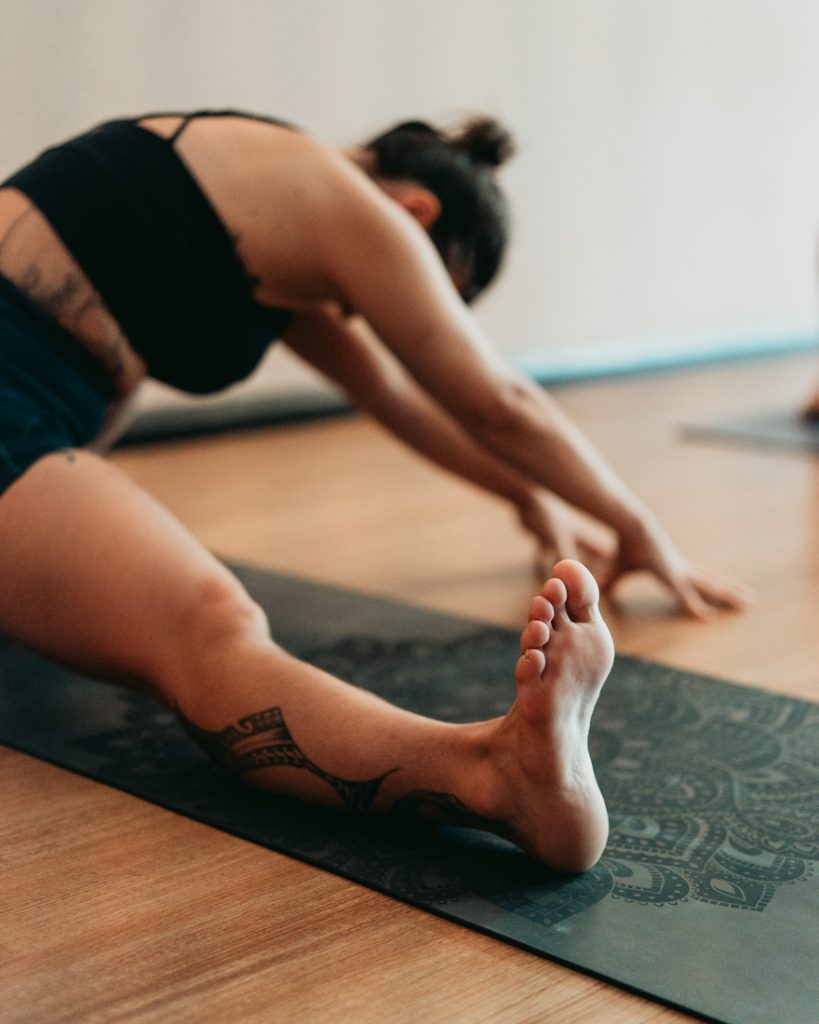
Move for five minutes. Easy stuff on the lounge room floor. Arms overhead, a slow forward fold, a gentle twist each way. You're shaking off the shape you've been sitting in for eight hours.
Change your clothes before you change your focus. Getting out of work clothes is an old trick and it's still one of the best.
Want to get the longer exhale right? Our Breathwork for Everyday Life course teaches it in short sessions you can do in the car, at your desk or on the floor.
A simple week to try it
Don't try all four on Monday. For the first week, just do the finish line and the three minutes in the car. That's it. In week two, add the five minutes of movement on two or three evenings. If you can get to an after-work class once or twice that week, even better, cause a class does the whole job for you in one hit.
Keep the whole thing to around ten minutes. If it grows into a forty-minute routine, you'll do it twice and then quietly drop it. I've watched that happen more times than I can count, and I've done it myself.
Here's what to watch for. Ignore whether you feel calm or relaxed. Notice how the first half hour at home goes. Are you answering in full sentences? Are you actually listening when someone tells you about their day? That half hour is the real measure.
The student with the kids did this for a month. Three minutes of breathing in the driveway and a quick stretch on the floor before she said hello to anyone. One night her youngest asked if work had finished early.
It hadn't. She had.
If you want the whole reset done for you, an after-work class does it in one hit. Our 30-Day Unlimited gives you a month to build the habit. Find an evening class on the timetable.
