Sciatica and Yoga: Why You Shouldn't Stop Moving
The first thing most people do when sciatica flares is stop moving. Sit down, lie flat, wait it out. That instinct makes sense — the pain can be sharp enough that any movement feels like exactly the wrong choice. But rest as the main strategy is usually what makes sciatica last longer, not shorter.
Sciatica describes pain that follows the path of the sciatic nerve: from the lower back, through the glute, down the back of the leg, sometimes into the foot. It can be a dull ache, a burning line, or a sharp electric sensation that appears without warning. The source is usually compression or irritation of the nerve: most commonly a tight piriformis muscle sitting directly on it, a bulging disc narrowing the exit point, or tightness and weakness in the surrounding hip and lower back structures, loading the nerve unevenly over time.
That last one is the most common and the most treatable with movement. The piriformis tightens when the glutes are underworking. The glutes underwork when the body has been sitting for long periods. The nerve gets compressed. The pain sends the message to rest more. The glutes underwork further. The cycle reinforces itself.
What to be careful with: deep forward folds that round the lower back significantly, heavy twisting without core support, and anything that loads the spine asymmetrically before an acute flare has settled. If the pain is severe, if you're getting numbness or tingling into the foot, or if symptoms aren't responding to gentle movement after a few days, see a physio or GP before continuing.
Movement Principles That Actually Help
Keep moving gently. Complete rest allows the surrounding muscles to tighten further around the nerve. Light walking, careful hip movements, and the practices below are consistently more effective than lying flat.
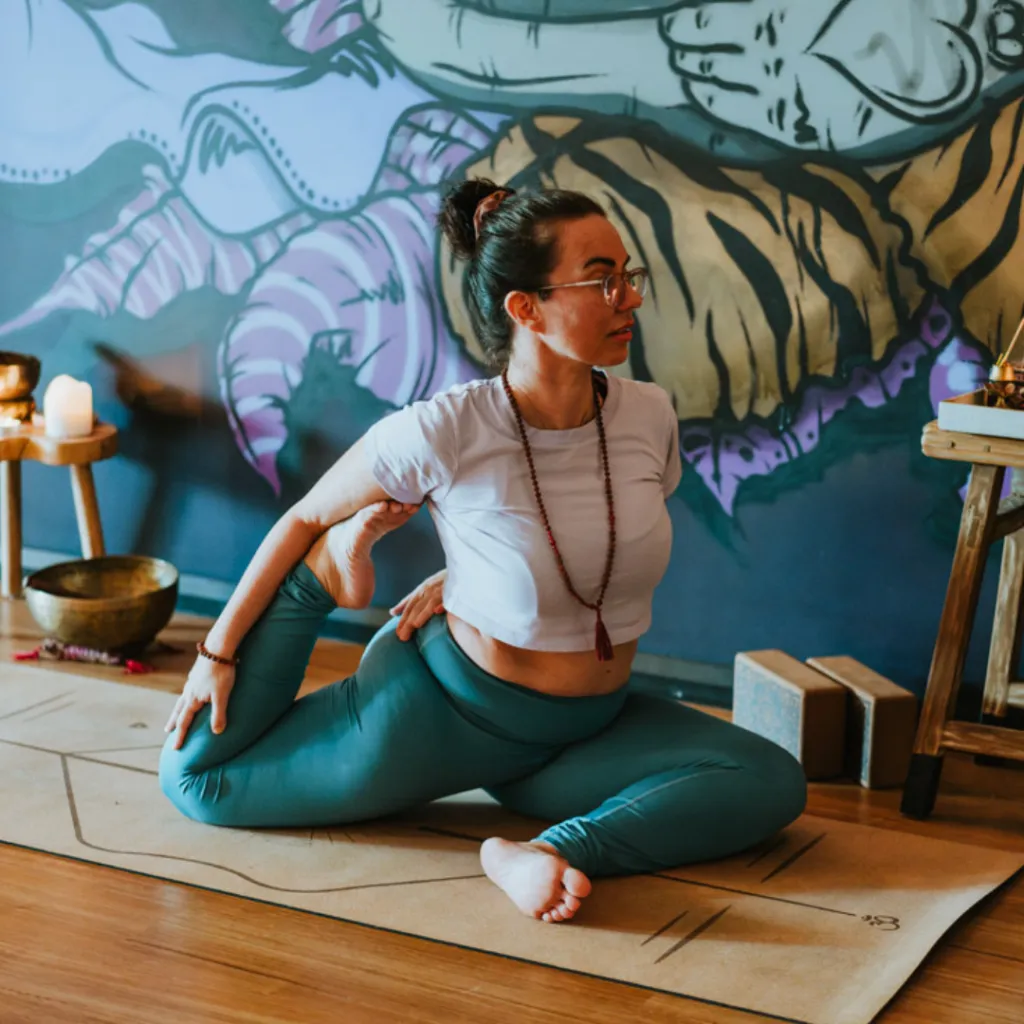
Address the piriformis directly. The piriformis sits deep in the glute and the sciatic nerve runs beneath it — in some people, through it. Reclined Pigeon is the most accessible stretch: lie on your back, cross one ankle over the opposite knee, flex the foot, and gently draw both legs toward the chest. If you feel it in the outer hip, the right muscle is working.
Rebuild glute and hip stability. Sciatica almost always involves a pattern where the glutes are underworking and the lower back is picking up the difference. Bridge Pose with deliberate glute engagement, side-lying hip work, and gentle single-leg stability movements rebuild that capacity without aggravating the nerve.
Reduce compression in the lower back. Gentle spinal decompression keeps the surrounding structures mobile: knees drawn toward the chest, Cat-Cow, Reclined Twist with support.
In class, Yin Yoga and Slow Flow are usually the most appropriate starting points during a flare. Positions like Reclined Pigeon, supported Dragon, and Bridge can be set up to specifically target the patterns that drive sciatica without loading the nerve. Tell the teacher what's happening before class — the adjustments that make these poses safe for sciatica are small and easy to apply.
Avoid heated vinyasa flow classes during an acute flare. The pace doesn't allow for the modifications that matter, and adding heat to an already irritated nerve isn't helpful.
Most sciatica responds well to movement. The people I've seen recover fastest aren't the ones who rested most. They're the ones who found the right kind of movement quickly and kept showing up. Three Slow Flow or Yin classes a week and most people notice a meaningful reduction in symptoms within four to six weeks.
If you've had sciatica persisting beyond a few weeks, or if you're experiencing leg weakness alongside the pain, get assessed before starting.
When you're ready to get moving, check the timetable for Slow Flow and Yin sessions. If you're new to the studio, the 30-Day Unlimited Trial gives you a full month to work with us.
