A Simple Evening Routine for Better Sleep
Most adults do not struggle with sleep because they are lazy, undisciplined, or doing life badly. They struggle because by the time the day ends, their system is still switched on. Work stress, parenting, screens, decisions, noise, and unfinished tasks all add up. Then people climb into bed expecting the body to shut down on command.
It rarely works like that.
A simple evening routine for better sleep is not about creating a perfect two-hour ritual with candles and zero real life. It is about giving your body a clear signal that the day is winding down. When that signal is missing, your mind keeps racing and your body keeps acting like there is more to do.
The real barrier is not lack of time
Most people assume they need more time to rest properly at night. Usually they need less friction. If your evening routine is too complicated, you will not stick to it. If it depends on motivation, it will fall apart the second life gets busy.
The best sleep routines are simple enough to repeat, even on messy days.
Why a wind-down routine matters
Your body does not go from full speed to full rest instantly. It responds to patterns. If the last hour of your night is filled with bright screens, work talk, snacks on the run, and mental stimulation, you are training your system to stay alert right up until bed.
A basic wind-down routine helps create a transition. That matters because better sleep is not only about feeling less tired. It affects patience, cravings, mood, recovery, concentration, and how much stress your body can handle the next day.
4 small changes that actually help
The first change is to create a stopping point. Pick a rough time when work, admin, and problem-solving are done for the day. It does not have to be perfect, but there needs to be a line somewhere. If your mind is still in task mode, sleep is harder.
The second change is to dim the intensity of your environment. That might mean lowering the lights, turning the TV off earlier, or putting the phone away for even 15 to 20 minutes before bed. You are trying to reduce input, not become a monk.
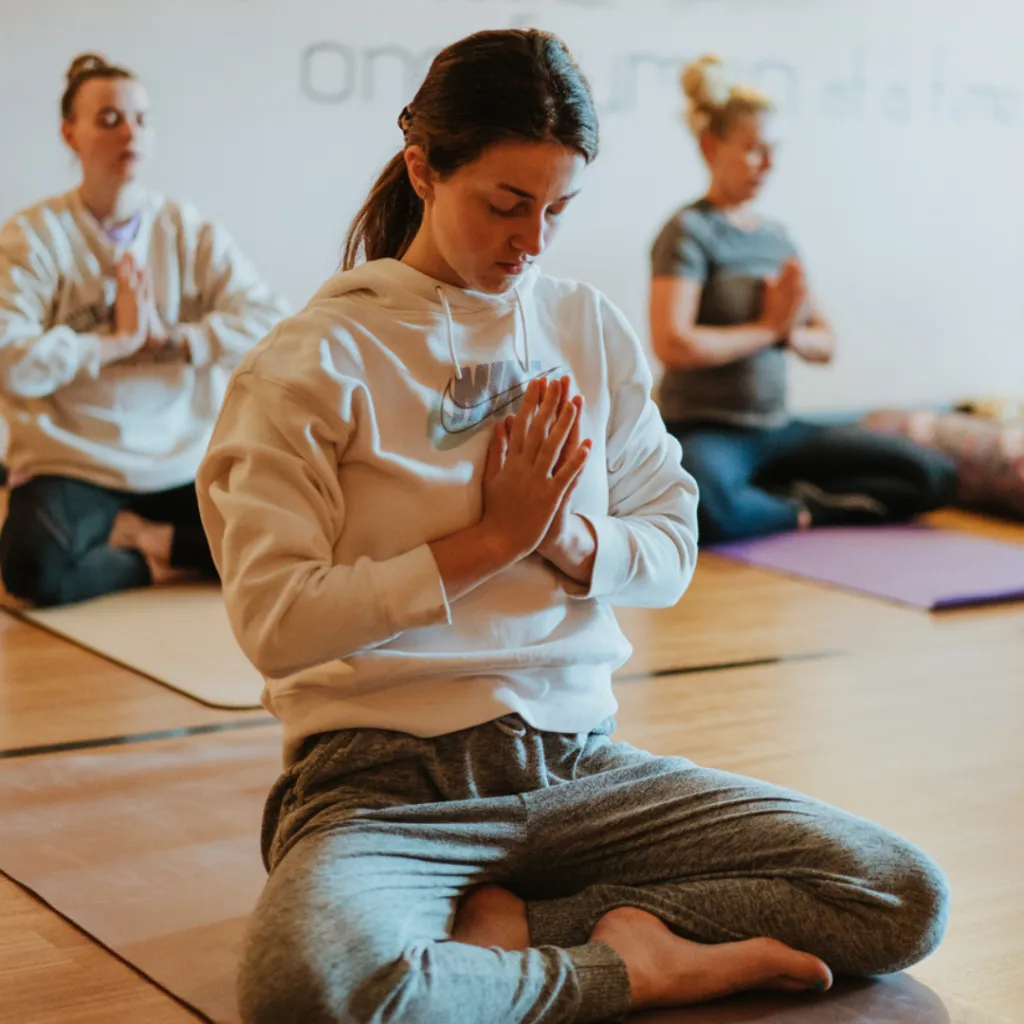
The third change is to use the body to help the mind settle. Gentle stretching, a slow walk, or a few minutes of down-regulating breathwork can help shift you out of go-go-go mode. This is one of the reasons yoga is so effective for busy adults. It gives the body a bridge between stress and rest.
The fourth change is to keep the routine short enough that you will actually do it. Five to ten minutes done consistently is far more useful than a big routine you abandon after three nights.
A simple weekly plan
On weekdays, keep it basic. Finish the main tasks of the day, reduce screen input, do two or three minutes of slow breathing, and spend a few minutes in gentle floor-based movement or stillness before bed.
On weekends, you can go a little deeper. A slower evening class, a longer stretch, journalling if that helps you clear your head, or simply more time away from stimulation can make a big difference. The point is not to make weekends perfect. It is to let your system catch up.
What this can look like in real life
A realistic evening reset might look like this: kitchen cleaned, phone down, lights softer, five minutes of legs up the wall or reclined twist, then slow nasal breathing before bed. That is enough. You do not need to overhaul your personality. You just need to give the body a repeatable cue that the day is done.
FAQs
What if I only have five minutes?
Then use five minutes. A short routine you actually repeat will beat a long routine you never do.
Do I need yoga experience for this?
No. The goal is not advanced practice. The goal is to help the body and mind downshift.
What if my mind still races?
That is normal at first. Keep the routine simple and repeatable. Your body often needs consistency before it starts responding more quickly.
Conclusion
A simple evening routine for better sleep does not need to be fancy to work. It just needs to be clear, consistent, and easy enough to repeat. For busy adults, that is usually the difference between another restless night and finally starting to switch off properly.
You do not need to get everything right. Just start creating a better ending to your day.
If switching off at night feels harder than it should, learning how to downshift your system matters. Our Breathwork for Everyday Life course gives you practical tools you can use at home, in real time, when your mind won’t stop: https://onebigheartoffer.com/breathworkeveryday
Want support building habits that help you sleep, recover, and handle stress better? Explore Breathwork for Everyday Life https://onebigheartoffer.com/breathworkeveryday or join us in studio through the timetable https://onebigheart.com.au/timetable
