Supine Twist for Lower Back Relief and Calm
Lower back tightness is sneaky. It rarely feels like a “big injury.” It feels like stiffness when you get out of the car, a dull ache after sitting too long, or a constant sense that your body is bracing for something. This is where Supine Twist for lower back relief becomes a quiet weapon—simple, accessible, and surprisingly effective when done well.
Supine Twist (Supta Matsyendrasana) isn’t a flashy pose. It’s a nervous system downshift and a spinal reset rolled into one. And for many people, it’s the first twist that actually feels safe.
Why Supine Twist works (when you stop forcing it)
A good twist isn’t about cranking your knees to the floor. It’s about creating space through the spine, softening the muscles around the hips, and signalling to your body that it can release.
When you lie on your back, gravity does a lot of the work. That makes Supine Twist ideal for beginners, people with tight backs, and anyone who needs a calm option at the end of the day. It can help support:
a sense of decompression through the lower back
hip and glute release (often linked to back tension)
better breathing mechanics (ribs move more freely)
down-regulation after a stressful day
How to do Supine Twist for lower back relief (step-by-step cues)
Start on your back. Take a second to feel your spine heavy on the mat. This pose works best when you go slow.
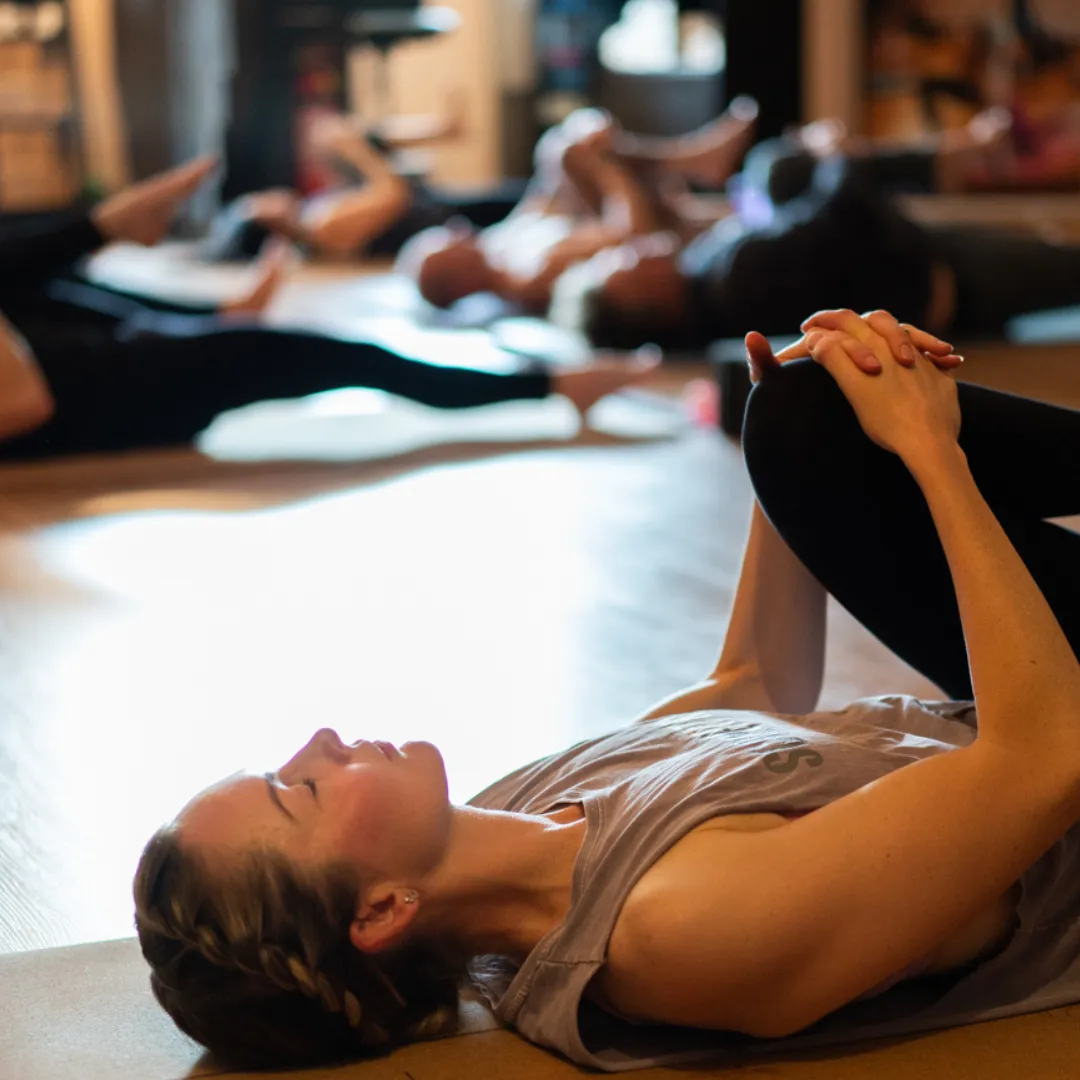
Bend your knees and place your feet on the floor. Hug both knees into your chest and gently rock side to side. This isn’t the twist yet—this is you checking in with what your back is carrying today.
Now extend your arms out to a T-shape. Palms can face up if you want a more relaxed shoulder position.
Let both knees drop to the right. Keep the movement controlled. If your knees don’t go far, good. Your body is giving you honest information.
The key: keep both shoulder blades heavy. If the left shoulder pops up, you’ve gone too far. Bring your knees closer to centre or support them with a prop.
Turn your head to the left only if your neck feels okay. If not, keep your head facing the ceiling. Your neck doesn’t need to “perform” for the pose to work.
Now breathe. Slow inhale through the nose. Longer exhale. On each exhale, let your belly soften and let the ribs melt.
Hold for 5–10 breaths, then switch sides.
Common mistakes that turn this into a back tweak
The most common issue is chasing the floor. When you force the knees down, you often drag the spine into rotation your body can’t stabilise, and your nervous system tightens in response.
Another mistake is letting the top shoulder lift. That’s usually a sign the twist is too deep. A “smaller” twist with grounded shoulders is far more therapeutic than a deep twist with a lifted chest.
Finally, people tend to hold their breath. Twists done with strain often create more tension than they release. If you can’t breathe smoothly, reduce the intensity.
Modifications, regressions, and progressions
If your lower back feels sensitive, bend the knees and place a pillow or yoga bolster under the knees so they’re supported. This turns the pose into a true release. Your nervous system will trust it faster.
If you feel pinching in the lower back, try separating the knees slightly (not glued together) so your pelvis has more space. You can also keep the knees closer to the centre rather than dropping them far to the side.
If you want a deeper stretch through the outer hip, cross the top leg over the bottom in a figure-four shape, then roll into the twist carefully. This is a progression—only do it if the basic version feels stable.
Contraindications and who should be cautious
Be cautious if you have acute back pain, recent disc irritation, or any sharp, shooting sensations. Twists should feel like a gentle wringing, not a jab. If you’re pregnant, twists are often modified significantly—get guidance from a qualified teacher.
And if your neck has issues, keep the head neutral. The twist can still support your back without adding neck rotation.
Where it fits in your practice (mini-sequence ideas)
Supine Twist is most useful in two moments: after sitting, and at the end of a practice.
If you’ve been at a desk or in the car, do a short reset: lie down, knees to chest, then Supine Twist both sides. The win here is consistency—your back learns it doesn’t need to stay braced all day.
At the end of a yoga session, Supine Twist is a strong bridge into Savasana. It helps the spine settle and the breathing smooth out, which can make your final rest feel deeper.
Want clear pose setup and weekly practice structure? Start Master 21 Poses here: https://onebigheartoffer.com/master21poses
Conclusion
If you want one pose you can do tonight that supports your body and your headspace, choose Supine Twist for lower back relief. Make it comfortable. Make it slow. Let the breath do the real work.
If your back is consistently tight and you want guidance in real classes, use 30-Day Unlimited to get started: https://onebigheartoffer.com/30-days-unlimited
