Tight Hips From Sitting? How Yoga Can Help
Most people don't realise how much sitting is changing their body until the hips start talking back.
It's not usually dramatic. It's the stiffness when you stand up after a long meeting. The tightness in the lower back that shows up by mid-afternoon. The way certain movements that used to feel easy now require a moment of negotiation. Tight hips from sitting are one of the most common things I see, and the frustrating part is that most people's solution makes it worse, not better.
The instinct is to stretch. Hard and deep, usually after a long day when the body is stiff and the tissues are cold. People force their way into a hip flexor stretch, hold it for thirty seconds, feel temporarily better, and then wonder why the same tightness is back by morning. Stretching isn't wrong. The approach is wrong.
Here's what's actually happening. When you sit for hours at a time, the hips stay in a flexed position and the body adapts to that. The hip flexors at the front shorten. The glutes, which are supposed to be the primary stabilisers of the pelvis and lower back, essentially switch off. Over time the body learns that this compressed, flexed position is the default, and it stops moving freely through anything outside that range.
That's why hip tightness rarely stays in the hips. It travels. Into the lower back, which starts compensating for what the hips can't do. Into the knees, which absorb forces they were never meant to absorb. Into posture, gait, and the general feeling of moving through the world like everything is just slightly harder than it should be.
Forcing a deep stretch into that system doesn't fix it. It just irritates tissue that's already under stress. What actually works is a smarter sequence — mobility first, then strength, with breath running through all of it.
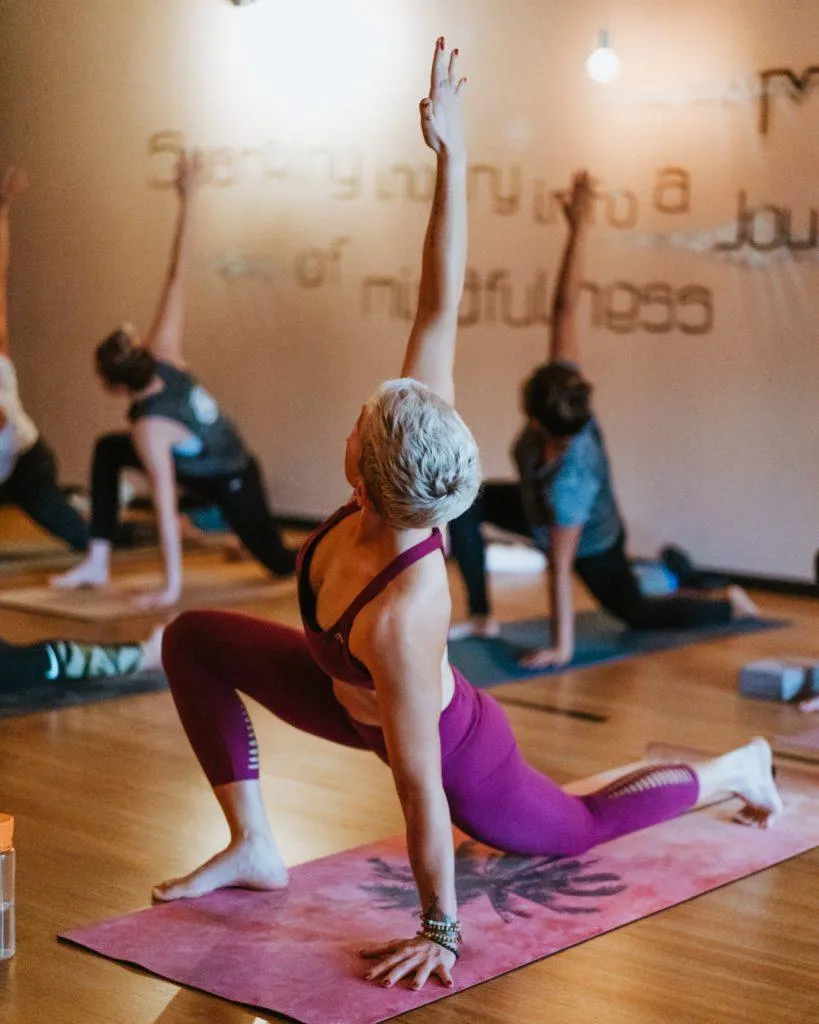
Mobility means moving the joint through a comfortable range before pushing the edges of it. Cat-cow to wake up the spine and pelvis. A low lunge that creates length at the front of the hip without demanding more range than the body currently has. A figure-four shape for the outer hip. A simple twist to restore rotation. None of it needs to feel dramatic. The point isn't a big stretch sensation. The point is getting the joint moving the way it's designed to move.
Then comes the strength piece, which most people skip. When the glutes and deep hip muscles start doing their job properly, the body stops gripping so hard through the front of the hips. The tension releases not because you stretched it away but because the system finally has the support it was looking for. Bridges, slow single-leg work, and the kind of controlled loading you get in a well-structured yoga class all contribute to this.
Breath ties it together. If you're bracing and rushing through movement, the nervous system reads that as a threat and holds on tighter. Slower breathing, steadier movement, and a willingness to stay in a position for long enough to actually feel what's happening — that's what changes the baseline over time.
If your hips are tight and you're coming to class, slower styles are usually the right entry point. You get more time to set up properly, feel what's actually going on, and work with modifications that meet your body where it is rather than where you think it should be. Props, shorter stances, bent knees — none of that is a concession. It's just smart practice.
Sharp pain, pinching at the front of the joint, or pain that radiates into the leg is worth getting assessed before you load it further. Most hip tightness from sitting responds well to movement. Some things need eyes on them first.
The real goal here isn't flexible hips. It's a body that moves through daily life without the constant low-grade resistance that tight hips create. Standing up easily. Walking without stiffness. A lower back that isn't constantly picking up the slack.
That's available. It just takes consistency over intensity, and enough patience to let the body adapt properly.
Check the timetable and find a class this week. Or start the OBH 30-Day Unlimited Trial and give your body a full month to actually feel the difference.
