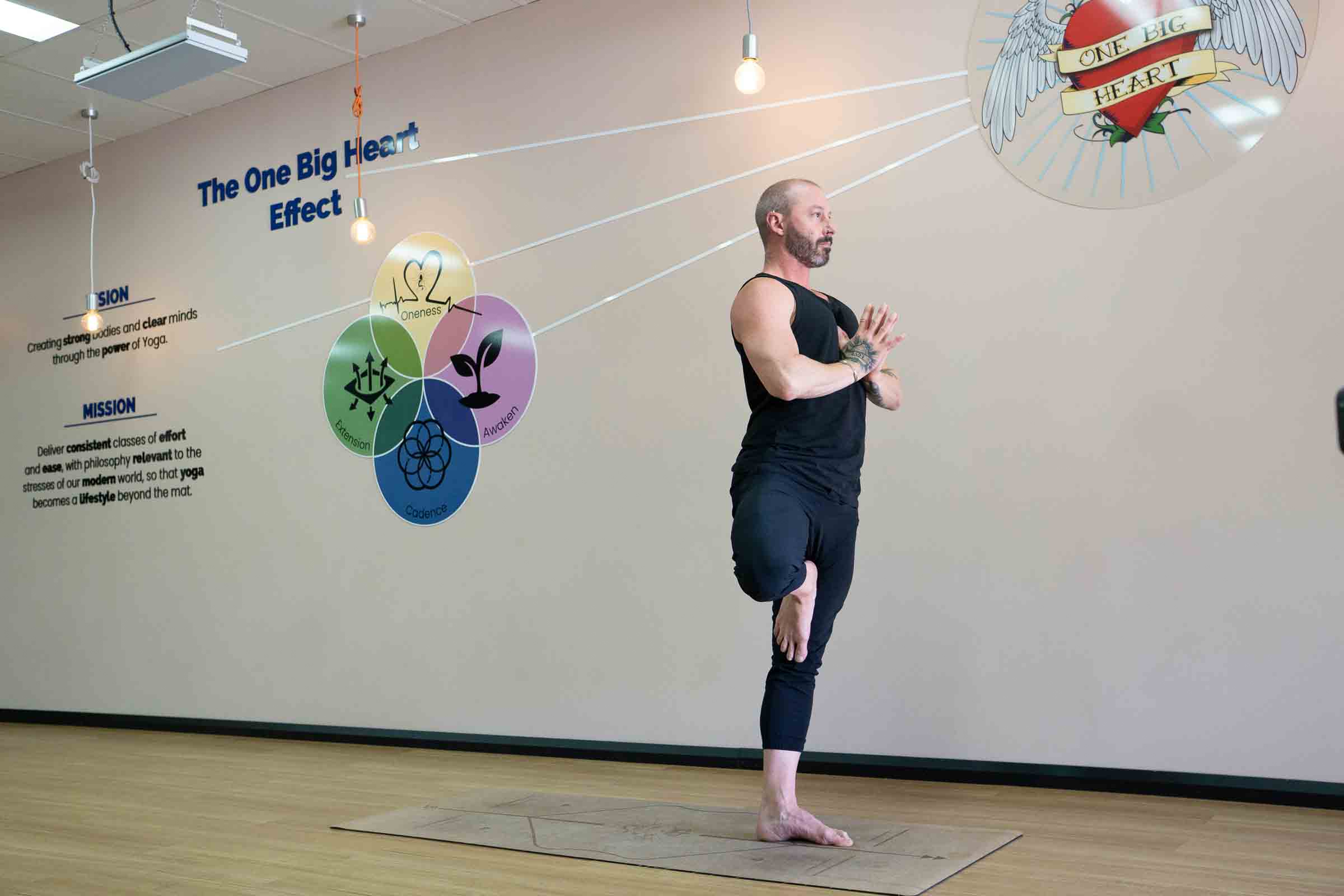
Tree Pose: The Balance Skill Most People Get Backwards
Most people grip Tree Pose as if their life depends on it. Standing leg locked, toes white-knuckling the mat, jaw tight, staring with an intensity that would unsettle most people across a dinner table. Then their attention moves for half a second and they are off the foot.
Tree Pose is different from almost every other balance pose because it makes the relationship between the mind and the body impossible to ignore. The mind wanders. The body follows. Not eventually, not metaphorically. Immediately and literally.
That is not a design flaw. That is what the pose is actually training.
Balance is not a physical skill in isolation. It is the result of the nervous system receiving continuous input from the foot, the hip, the eyes, and the inner ear, and processing that information fast enough to make constant micro-adjustments. Grip and brace disrupts that input. Stillness and attention improves it. The pose works better when you stop trying to force it.
How to Set Up Tree Pose
Stand in Mountain Pose and shift weight slowly into the right foot. Feel the full foot: heel, outer edge, ball of the foot, all four corners present and active.
Lift the left foot and place it on the inner right calf or inner right thigh. Not the knee. Never the knee. The knee is a hinge joint with no tolerance for lateral pressure.
Press the lifted foot and the standing leg into each other. This is an active relationship, not a passive one. The foot presses in, the leg presses back.
Find a fixed point at eye level that is not moving. One point. Soft focus, not a hard stare.
Bring the hands to the chest, or extend the arms overhead if the balance is steady. Breathe.
Hold for five to eight breaths, then switch sides.
The most common mistake is the foot on the knee. It feels more impressive and it is more precarious, which most people interpret as harder. It is not harder. It is just riskier. The knee has no rotational tolerance and lateral load from the foot is not difficulty of balance. Move the foot up to the thigh or down to the calf.
The second mistake is looking at something that moves. Another student shifting, a ceiling fan, a window with traffic outside. The visual system contributes significantly to balance. A fixed point gives it the clear input it needs.
For people with ankle instability, keep the toes of the lifted foot on the floor with just the heel resting against the standing ankle. This reduces the demand on the standing ankle while keeping the hip rotation and the mental focus component fully intact.
To make the pose considerably harder without changing the foot position, close the eyes. That removes the visual input entirely and forces the nervous system to work from proprioception alone. Most people are surprised by how different the same pose becomes.
Tree Pose fits naturally between more demanding standing poses. The steadiness it requires creates a pause that resets both the breath and the attention before the next shape.
The students who hold it longest are not the most physically capable in the room. They are the ones who have stopped fighting the wobble and started treating it as information. That shift does not stay on the mat.
If you want proper cueing for Tree Pose alongside the other foundational shapes we build every class around, it is covered in Master 21 Poses.
Check the timetable and find a class this week.
