Why You Feel Switched On All the Time
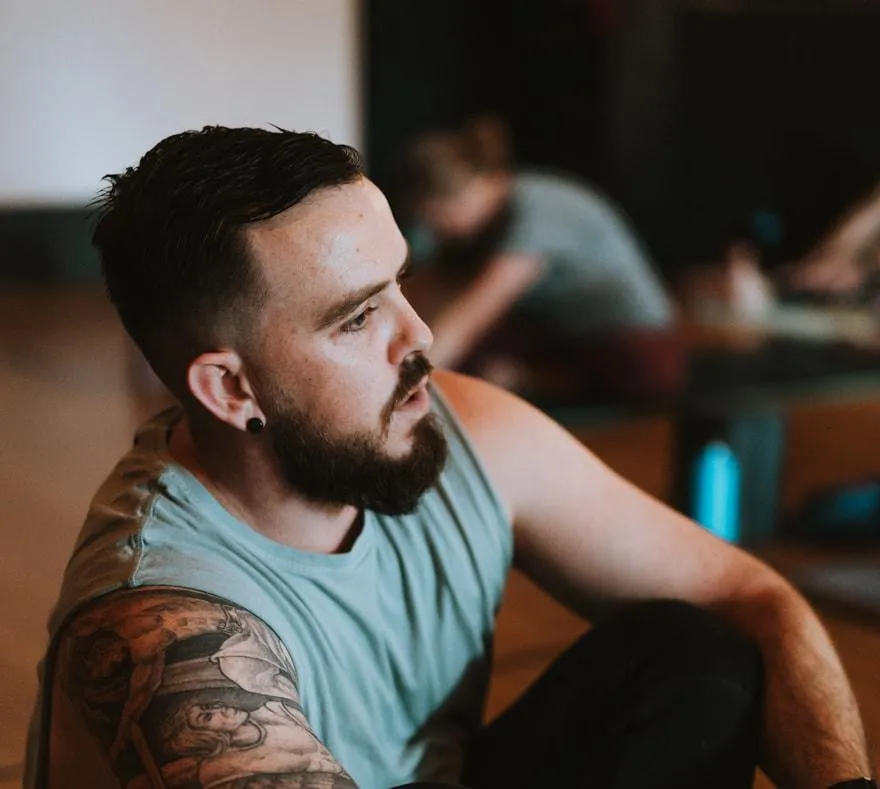
A bloke in his forties came up to me after class recently and said something that stuck with me. "I'm not stressed though. I'm just always like this." Jaw tight. Shoulders sitting up near his ears. The kind of guy who looks switched on even when he's standing still doing nothing.
He genuinely believed it wasn't stress. He thought it was just how he was built.
It wasn't. It was a nervous system that had been running so long without a proper off switch that being on had quietly become his baseline. And he's far from alone in that. A lot of people move through life half-braced without realising it. Tight jaw. High shoulders. A mind that's always scanning for what's next, even when nothing's actually happening.
If that sounds familiar, it doesn't mean something's wrong with you. It usually means your system has had so much repetition of stress, stimulation, and mental load that it's forgotten how to come down properly. Most adults assume stress only counts when life is visibly falling apart. But it's often running quietly in the background long before it gets anywhere near that point.
Your body's built to handle pressure in short bursts. The problem is modern life rarely deals in short bursts. Emails, traffic, screens, deadlines, poor sleep, noise, money pressure, constant low-grade mental engagement. None of it looks dramatic on its own. Stacked together, it keeps the whole system switched on indefinitely.
Eventually the body gets very good at being on. The trouble is, it gets correspondingly bad at switching off. That's how people end up sitting down at night still restless, lying in bed exhausted but unable to actually relax, going on holiday and somehow still feeling wired the entire time. It's not weakness. It's a pattern the body has rehearsed so many times that it's become the default setting.
That state costs more than people clock. It affects patience, sleep, digestion, recovery, cravings, focus, how you show up with the people around you. Small things start feeling disproportionately big. You get flat, reactive, foggy, without ever quite knowing why.
This is usually where someone says "I just need a break." Sometimes that's true. More often, what they actually need is better regulation. Because if your system doesn't know how to downshift, you can take a week off and come back just as tense as when you left.
The first move is simply noticing it earlier. Tight jaw, shallow breath, a racing mind, constant scrolling, feeling tired but unable to settle. Most people only catch these signs once they're already deep into the pattern, which is exactly why naming them early matters.
The second move is using the body, not just the mind, to interrupt it. You can't think your way out of a physiological state. Slow breathing, gentle movement, a longer exhale, simple grounding — these work because they give the nervous system a different input than the one it's used to running on.
Beyond that, reducing stimulation where you genuinely can, and building in small, repeatable resets rather than waiting until you're completely wrecked, are what actually shift the baseline over time. Not perfectly. Not forever. Just consistently enough that the body starts learning a different rhythm exists.
If you want something to actually do right now: sit or lie down somewhere comfortable. Inhale through the nose for four counts, exhale for six. Keep the shoulders soft and the jaw loose. Two to three minutes. You're not trying to fake calm. You're showing the body a different pattern, and the more often you show it, the faster it starts to remember.
If you're functioning but quietly running yourself into the ground, don't wait for it to get loud enough to demand attention. The answer isn't becoming less capable. It's getting better at the recovery side of the equation, which is a skill like any other, and one that's entirely trainable.
If you want practical tools for this, the Breathwork for Everyday Life course is built exactly for it. Or come and work through it in person — check the timetable and find a session this week.
