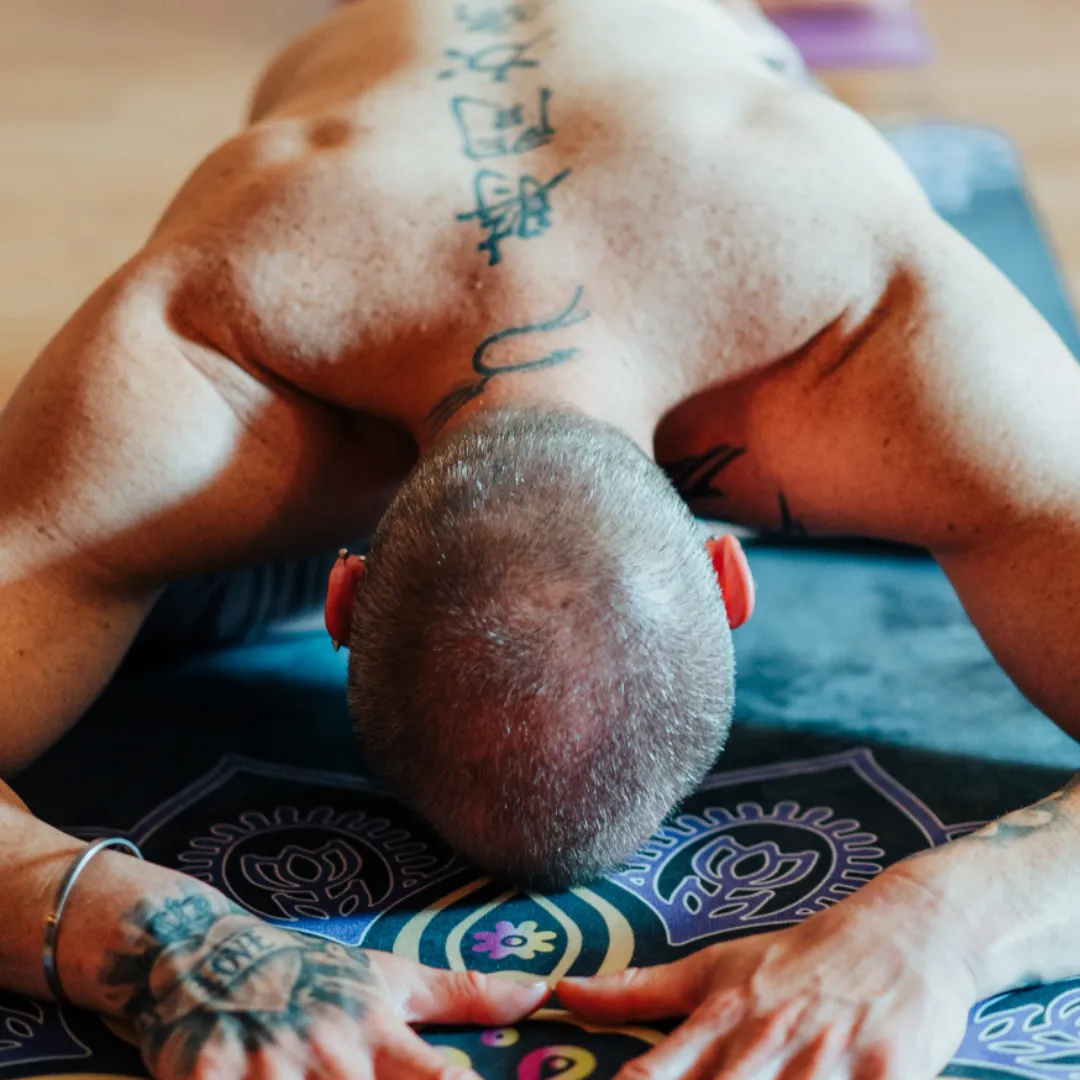
Wide-Legged Forward Bend with Arms Behind Back: Strength, Release, and Shoulder Freedom
Wide-Legged Forward Bend with Arms Behind Back is a powerful variation of Prasarita Padottanasana that combines a deep lower-body stretch with an intense opening through the shoulders and chest. By clasping the hands behind the back and folding forward, this posture stretches the entire posterior chain while counteracting the rounded posture created by sitting, typing, and driving.
This pose teaches the body how to release tension while maintaining strength and control. As the legs ground firmly into the mat and the spine lengthens forward and down, the shoulders are invited into a rare position of extension. The result is a posture that restores balance across both the front and back of the body.
Opening the Body from Both Ends
Most forward folds focus primarily on the hamstrings and lower back. Adding the arm bind transforms this pose into a full upper- and lower-body integration. The legs stabilise and support, the spine lengthens and decompresses, and the shoulders release deeply. This creates a unique combination of grounding and expansion.
The bind also improves shoulder mobility by reversing the forward rounding that develops through daily habits. Over time, this can improve posture, breathing efficiency, and overall upper-body function.
Benefits of Wide-Legged Forward Bend with Arms Behind Back
Stretches the Hamstrings and Inner Legs
The wide stance targets the hamstrings, adductors, and calves, improving flexibility and reducing stiffness.
Opens the Shoulders and Chest
Clasping the hands behind the back stretches the shoulders and front of the chest, helping reverse poor posture.
Decompresses the Spine
The forward fold allows gravity to gently lengthen the spine, relieving tension and compression.
Improves Circulation and Energy Flow
The inverted position encourages blood flow toward the upper body and brain, supporting clarity and focus.
Builds Balance and Stability
Maintaining control in the fold strengthens the legs and improves body awareness.
How to Practise Wide-Legged Forward Bend with Arms Behind Back
Begin standing with your feet wide apart, roughly one leg-length distance between them.
Interlace your fingers behind your back and straighten your arms, drawing the shoulder blades toward each other.
Inhale to lengthen through your spine and lift your chest.
Exhale and hinge forward from the hips, keeping the spine long as you fold.
Allow your arms to lift away from your back as your torso lowers toward the floor.
Keep your weight evenly distributed across both feet and engage your legs.
Hold for 5–10 breaths, maintaining steady, calm breathing.
To come out, engage your core and slowly rise back to standing.
Modifications and Tips
If your hands cannot clasp, hold a yoga strap behind your back.
Keep a slight bend in the knees if the hamstrings feel tight.
Avoid forcing the arms overhead—let gravity gradually open the shoulders.
Focus on lengthening the spine rather than pulling yourself deeper into the fold.
Keep the neck relaxed and aligned with the spine.
When to Use This Pose
This pose is ideal during the middle or end of a yoga practice when the body is warm. It works well in sequences focused on flexibility, posture improvement, and shoulder mobility. It is also excellent as a counterpose after strengthening exercises or long periods of sitting.
Conclusion
Wide-Legged Forward Bend with Arms Behind Back is a deeply restorative and strengthening posture that addresses tension in both the upper and lower body. It teaches you how to ground through the legs while releasing through the spine and shoulders. With regular practice, this pose improves posture, mobility, and overall body awareness, helping you move and breathe with greater freedom and ease.
