Build a Yoga Habit That Sticks: The Habit Stacking Method
A guy on a Discovery Call told me he'd been meaning to stretch every morning for about three years. Bought a mat for it. Watched a few videos. Never once did it before work. When I asked why, he said the same thing almost everyone says: "I just need more discipline."
He doesn't. Nobody does. That's not the problem and it's never been the problem.
The problem is he was trying to build a brand new habit floating in space, with nothing holding it up. Get up, somehow remember to stretch, somehow find the motivation, somehow do it before the day swallows the intention whole. Three things have to go right in a row before he's even started. Most days, one of them doesn't.
Here's what I've watched work, over and over, with people who've got full schedules and not much spare energy: attach the new habit to something you're already doing automatically. Not a new block of time. Not a new alarm. A handle on something that already happens every day without you having to think about it.
Coffee gets made every morning whether you're motivated or not. Teeth get brushed every night without negotiation. The car gets parked in the same spot after work. These are anchors. They're already locked in. A new habit attached to one of them inherits its reliability for free.
A few ways this actually plays out:
After the kettle goes on, before it boils: two minutes of standing forward folds and a few shoulder rolls. The kettle was happening regardless. Now something's attached to it.
After you park the car when you get home from work, before you walk inside: five minutes in the car, or on the lawn, doing nothing but a slow breath count. Four in, six out, for two minutes. The walk inside was happening regardless. Now there's a buffer between work-you and home-you.
After you brush your teeth at night: thirty seconds in Child's Pose on the bathroom floor or the bedroom rug. Sounds small because it is small. That's the point.
None of these need extra time carved out. None of them need you to remember a new thing to remember. They ride on something that was already going to happen.
The weekly version of this is simple. Pick one anchor, not three. Attach one small movement to it. Run it for a week before adding anything else. People who try to overhaul their whole routine in one go usually quit by Thursday, and not because they're weak. It's because they were never relying on an existing habit to carry the new one. They were relying on motivation, and motivation runs out by Wednesday afternoon most weeks.
By week two, once the anchor habit feels automatic, add a second one. A second small movement attached to a second part of the day that already happens without effort. Two reliable habits compound faster than one ambitious one that collapses under its own weight.
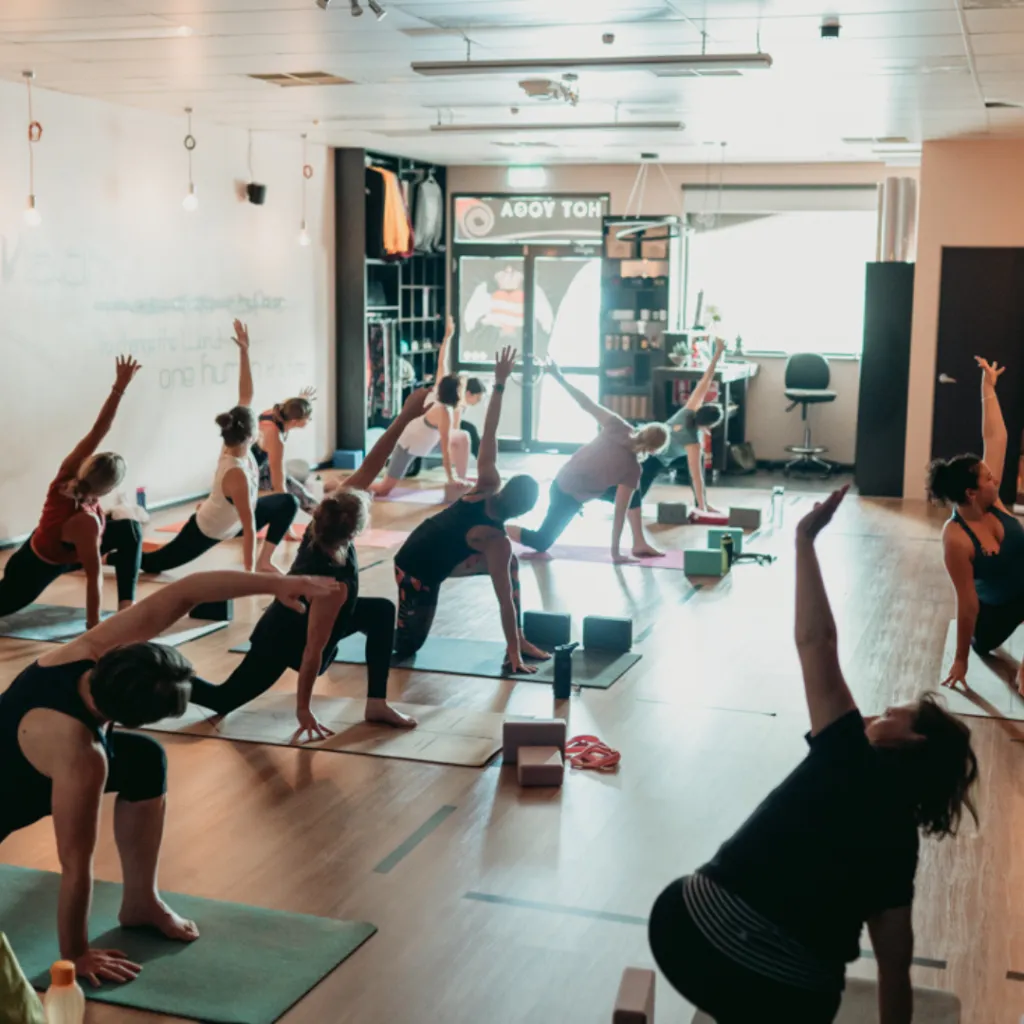
This is also exactly why showing up to a scheduled class works better than promising yourself you'll practise at home. The class is the anchor. It's already on the calendar, already has a start time, already has other people in the room. You're not relying on remembering. You're relying on a thing that was going to happen anyway, with you in it.
Pick one anchor today. One small movement. Run it for seven days before you decide whether it's working. Most people quit on day three, right before it would have started feeling automatic.
If you want a stronger anchor than your kettle, check the timetable and book a class for this week. Same principle. Just with better company.
