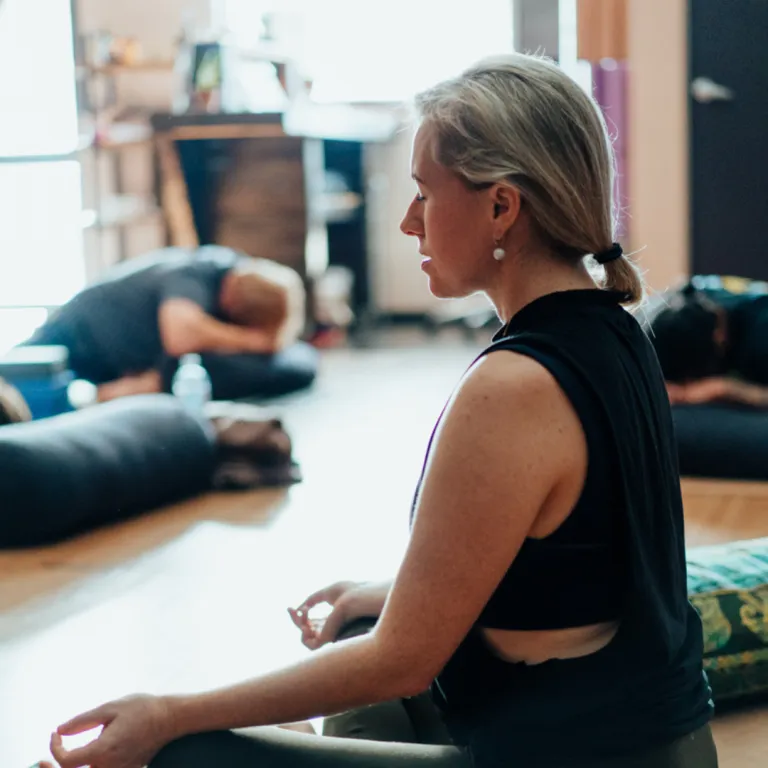
Aligning Body and Mind to Navigate Life’s Transitions With Grace
Life doesn’t ask permission before it changes.
A new job. A breakup. A move. A health shift. A friendship evolving. A season of uncertainty where nothing is “wrong,” but nothing feels settled either. Transitions can be exciting — and still feel like your nervous system is doing laps.
Grace isn’t something you’re born with. It’s something you practise. And one of the fastest ways to practise it is to align your body and mind so you’re not fighting change from the inside.
Yoga was built for this. Not as an escape from life — but as training for it.
Why Transitions Feel So Intense
Most transitions trigger two things at once:
Loss of familiarity
Even positive change comes with the loss of what was known. The brain loves predictability. When predictability disappears, the nervous system often spikes into stress.Identity friction
Transitions ask you to become someone new — and that can feel disorienting. Your mind tries to rush ahead (“What’s next?”), while your body holds the truth (“I’m not settled yet.”)
When body and mind are out of sync, you feel scattered: overthinking, restless, reactive, emotionally “too much” or numb.
Alignment is the remedy.
What “Alignment” Actually Means
Alignment isn’t just posture. It’s internal coherence:
Your breath matches the moment
Your body isn’t bracing against your life
Your mind isn’t dragging you into worst-case futures
Your emotions are allowed to move without taking the wheel
In yogic terms, this is the path from vikshepa (mental distraction) to sthira-sukha — steadiness and ease.
Not perfect calm. Reliable steadiness.
Yoga Philosophy: The Wisdom for Change
Transitions are where yoga philosophy stops being “interesting” and becomes essential.
Aparigraha (Non-grasping)
Gripping is the default response to change: gripping the past, gripping certainty, gripping control.
Aparigraha teaches you to release what you can’t hold — without collapsing. It’s the internal posture of:
“I can let go and still be okay.”
Santosha (Contentment)
Santosha doesn’t mean “be happy with less.” It means:
“I can meet this moment without needing it to be different first.”
That is grace.
Abhyasa + Vairagya (Practice + Non-attachment)
In the Yoga Sutras, transformation comes from:
Abhyasa: consistent practice
Vairagya: releasing fixation on outcomes
This combo is the blueprint for navigating transitions: show up, do the work, loosen the obsession with how it “should” go.
The Body Remembers: Why Movement Matters
Transitions aren’t just thoughts — they’re stored experiences.
When change happens, the body often responds with:
tight chest
clenched jaw
shallow breath
fatigue
restlessness
a subtle sense of threat
Yoga helps your body process what your mind can’t “think” its way through. Strong flows can discharge excess adrenaline. Slow holds can teach your system safety again. Breathwork can downshift you from survival mode to presence.
This is why aligning body and mind matters: it turns transition from a stress event into a growth event.
A Practical 3-Part Method for Grace Under Change
Use this when life feels in flux — even if you only have 10 minutes.
1) Regulate First (2 minutes)
Put one hand on your chest, one on your belly.
Breathe in for 4, out for 6.
Repeat 6–8 rounds.
Longer exhales signal safety to the nervous system. You’re telling your body: “We’re here. We’re okay.”
2) Move the Stuck Energy (5 minutes)
Choose a short sequence:
Cat/Cow x 8
Low Lunge (each side) x 5 breaths
Forward Fold x 8 breaths
Child’s Pose x 8 breaths
This isn’t about flexibility. It’s about creating flow where you’ve been frozen.
3) Reframe With One Clear Intention (30 seconds)
Pick one sentence that reflects how you want to move through this transition:
“I can take the next step without seeing the whole staircase.”
“I release what’s finished.”
“I choose steadiness over urgency.”
“I trust myself in the unknown.”
That’s sankalpa: an intention that shapes your actions.
What Grace Looks Like in Real Life
Grace in transition doesn’t look like never struggling.
It looks like:
pausing before you react
letting emotions move without spiraling into stories
doing one small stabilising practice daily
asking for support sooner, not later
staying kind to yourself while you’re becoming someone new
Grace is nervous system strength. It’s emotional intelligence. It’s self-trust with a calm pulse.
The Takeaway
Transitions will keep coming — because growth requires change.
When you align body and mind, you stop meeting change with panic and start meeting it with presence. You become the kind of person who can move through uncertainty with a steady breath and a clear centre.
That’s not luck. That’s practice.
And yoga is one of the best practices there is.
