Finding Stillness in Chaos: My Journey with Daily Meditation and the Science Behind It
Life in your 20s and 30s is anything but quiet. Work deadlines, social media scrolls, weekend plans, relationship ups and downs, and the constant pressure to “have it all figured out” — it’s chaos disguised as normal.
I lived that chaos. I wore stress like a badge of honour, mistook busyness for importance, and filled every gap in my calendar with noise. Until I broke.
What followed wasn’t some magical transformation — just a small, quiet decision: I sat still for 5 minutes. And I did it again the next day. That small decision changed everything.
This is my journey with daily meditation — and why you, especially if you feel too busy or too anxious to sit still, might need it the most.
How I Found Meditation (or Maybe It Found Me)
I didn’t start meditating because I was “into yoga” or wanted to “raise my vibration.” I started because I was losing sleep, snapping at people I cared about, and couldn’t string two calm thoughts together without spiraling.
At first, it was hard. My mind would race, my body would itch to move, and I’d question what the hell I was doing. But I kept showing up. Five minutes became ten. Ten became twenty. Not because I was chasing enlightenment — but because it worked.
The Real Science Behind Why It Works
You don’t have to take my word for it. The benefits of meditation are backed by solid neuroscience. Here’s what’s really going on when you sit still and focus on your breath:
🧠 Your Brain Rewires for Calm
Studies using MRI scans show that regular meditation increases grey matter in the hippocampus (linked to learning and memory) and shrinks the amygdala (your fear/stress center). Translation? You get better at staying calm under pressure.
❤️ Your Nervous System Stops Freaking Out
Meditation activates the parasympathetic nervous system — the “rest and digest” state — lowering your heart rate, blood pressure, and cortisol levels. Even just 10 minutes a day can begin to down-regulate your stress response.
🔄 You Build Mental Flexibility
Meditation increases the thickness of the prefrontal cortex — the part of your brain responsible for decision-making, emotional regulation, and focus. That means you can stop reacting and start responding.
What It’s Actually Like to Meditate Every Day
You don’t need incense, a Himalayan retreat, or even 30 uninterrupted minutes. You just need willingness.
Here’s what my daily meditation practice looks like:
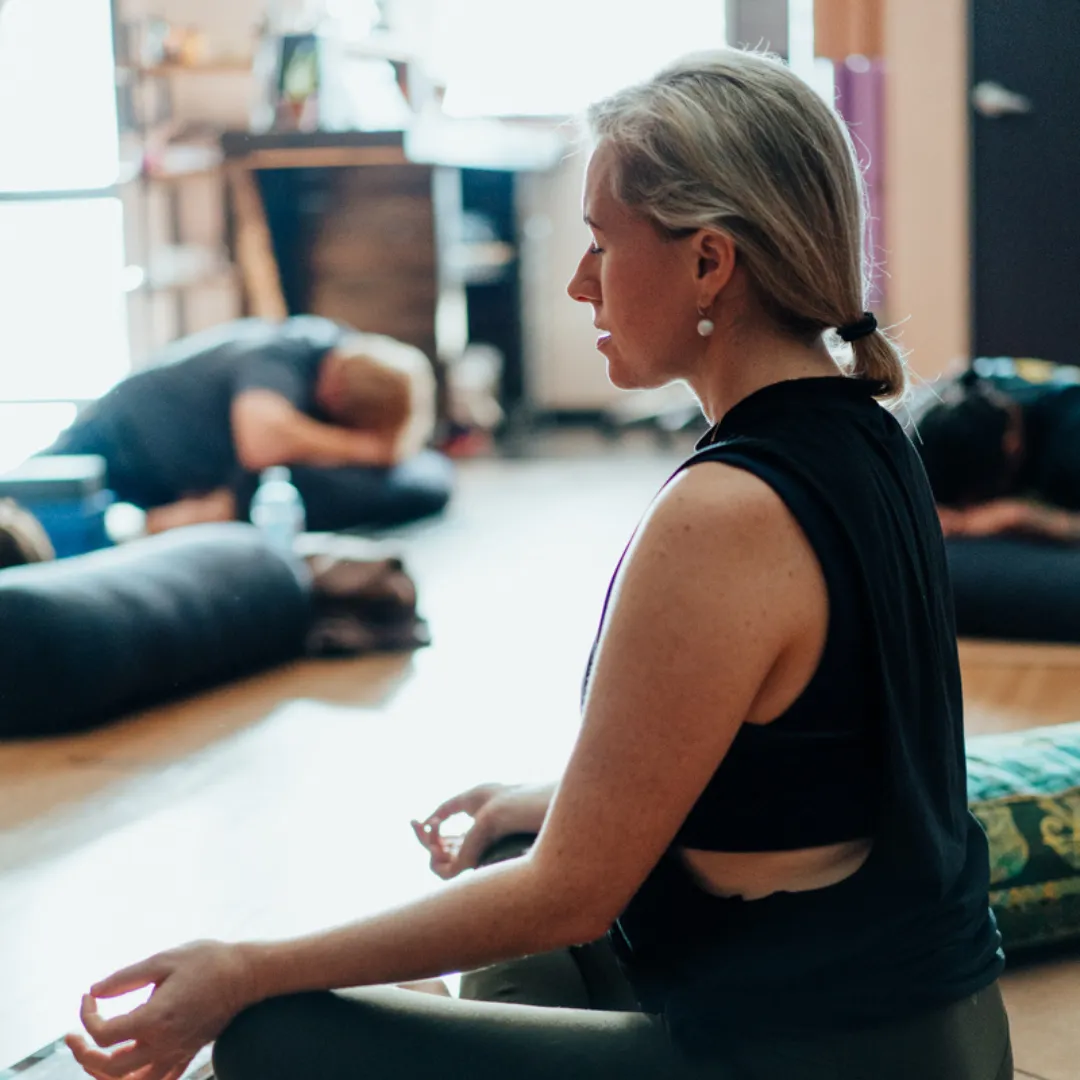
I sit on a yoga block or cushion.
I close my eyes and breathe deeply for a few rounds.
I focus on my breath — in and out.
When my mind wanders (and it does), I bring it back gently.
Some days feel profound. Some feel like a mental battle. All of them count.
What’s changed?
I no longer start my day in panic mode.
I notice thoughts without being hijacked by them.
I recover from stress way faster.
And the stillness I find? It spills into the rest of my life.
Your Turn: 3 Ways to Start Today
If you're curious (or desperate), here’s how to start:
1. Try the 5-Minute Rule
Set a timer. Sit still. Breathe. No expectations. Just show up.
2. Use Guided Meditations
Apps like Insight Timer, Headspace, or even YouTube can help you stay focused and consistent.
3. Join a Yoga Class with Meditation
At our studio, we blend movement with mindfulness — because sometimes you need to move before you can sit still.
Final Thoughts: You Don’t Need to Be Calm to Start
You don’t need to be spiritual, peaceful, or “into meditation” to begin. You just need to be tired of the chaos. Stillness isn’t about escaping life — it’s about meeting it with more clarity, courage, and calm.
And the first step? Take a breath.
