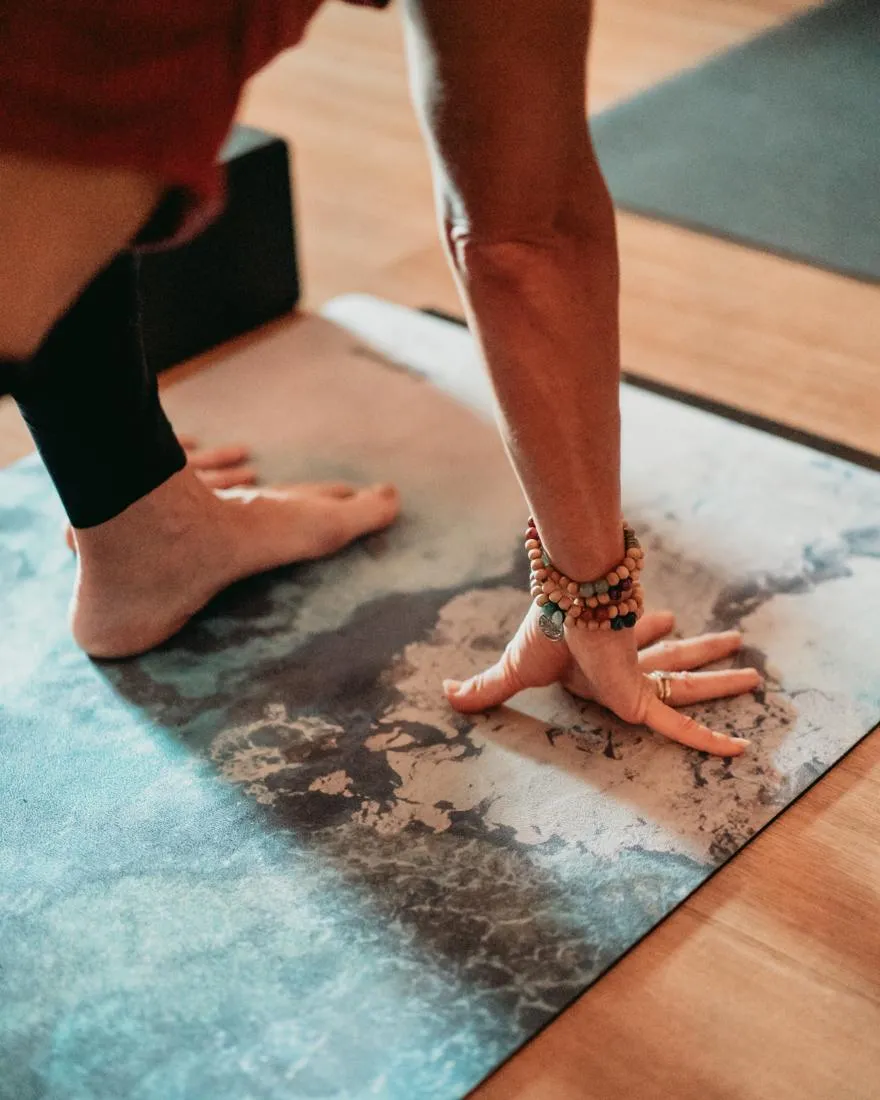
Reverse Plank with Leg Lift: Strength, Stability & Control in One Pose
Reverse Plank (Purvottanasana) is already a powerful posture for building posterior-chain strength, opening the chest, and activating the core. Add a leg lift, and the challenge elevates instantly. This variation demands precision, full-body coordination, and deep engagement through the shoulders, glutes, hamstrings, and core.
It’s a pose that looks simple — but delivers serious strength benefits for anyone wanting a more balanced and resilient body.
Why Reverse Plank with Leg Lift Matters
Most modern movement focuses heavily on the front of the body — core work, forward bends, sitting at desks, lifting weights forward. Reverse Plank counters this imbalance by strengthening the muscles we tend to neglect: the back body, posterior shoulders, and hip extensors.
Adding the leg lift intensifies the work, forcing your stabilisers to fire and your breath to stay steady. It’s functional, challenging, and deeply effective.
Key Benefits
Strengthens the Posterior Chain
Targets glutes, hamstrings, lower back, and triceps — essential for posture and spinal support.
Improves Core Stability
The leg lift requires deep abdominal activation to prevent collapsing in the hips or shoulders.
Enhances Shoulder Strength and Mobility
Builds stability and mobility in the shoulder girdle while stretching the front of the chest.
Boosts Balance and Coordination
Lifting one leg forces your body to stabilise through asymmetrical load — a key skill for daily movement.
Opens the Front Body
Counteracts the effects of sitting, slouching, and forward-heavy lifestyles.
How to Practise Reverse Plank with Leg Lift
Start seated with legs extended, hands placed behind you, fingers pointing toward your feet.
Activate your core and press into your palms to lift your hips into Reverse Plank.
Keep your body in one long line: chest open, hips lifted, legs strong.
On an inhale, lift your right leg off the floor — just a few centimetres, or to hip height if possible.
Hold for 1–2 breaths, lower the leg, and repeat on the other side.
Lower your hips slowly to return to the floor.
Modifications & Tips
Shoulder sensitivity? Turn the fingers outward or slightly behind you.
Try Bent-Knee Reverse Tabletop if straight-leg Reverse Plank is too strong.
Keep your gaze neutral to avoid neck strain.
Lift the leg slowly — the slower you go, the stronger the activation.
When to Use This Pose
Perfect in:
Strength-focused flows
Mobility and posture sequences
Core conditioning routines
Warm-ups for arm balances or backbends
Reverse Plank with Leg Lift is especially beneficial for people who sit long hours, athletes needing posterior-chain strength, and anyone working toward stronger upper body and core control.
Final Thoughts
Reverse Plank with Leg Lift is a reminder that one pose can train many systems at once — strength, mobility, balance, breath, and mental focus. It teaches you how to stabilise under pressure while opening the body in a meaningful way.
Include it regularly and feel the difference in your posture, confidence, and total-body strength.